Steel vs Aluminium Facade Cassettes – Which Material to Choose?
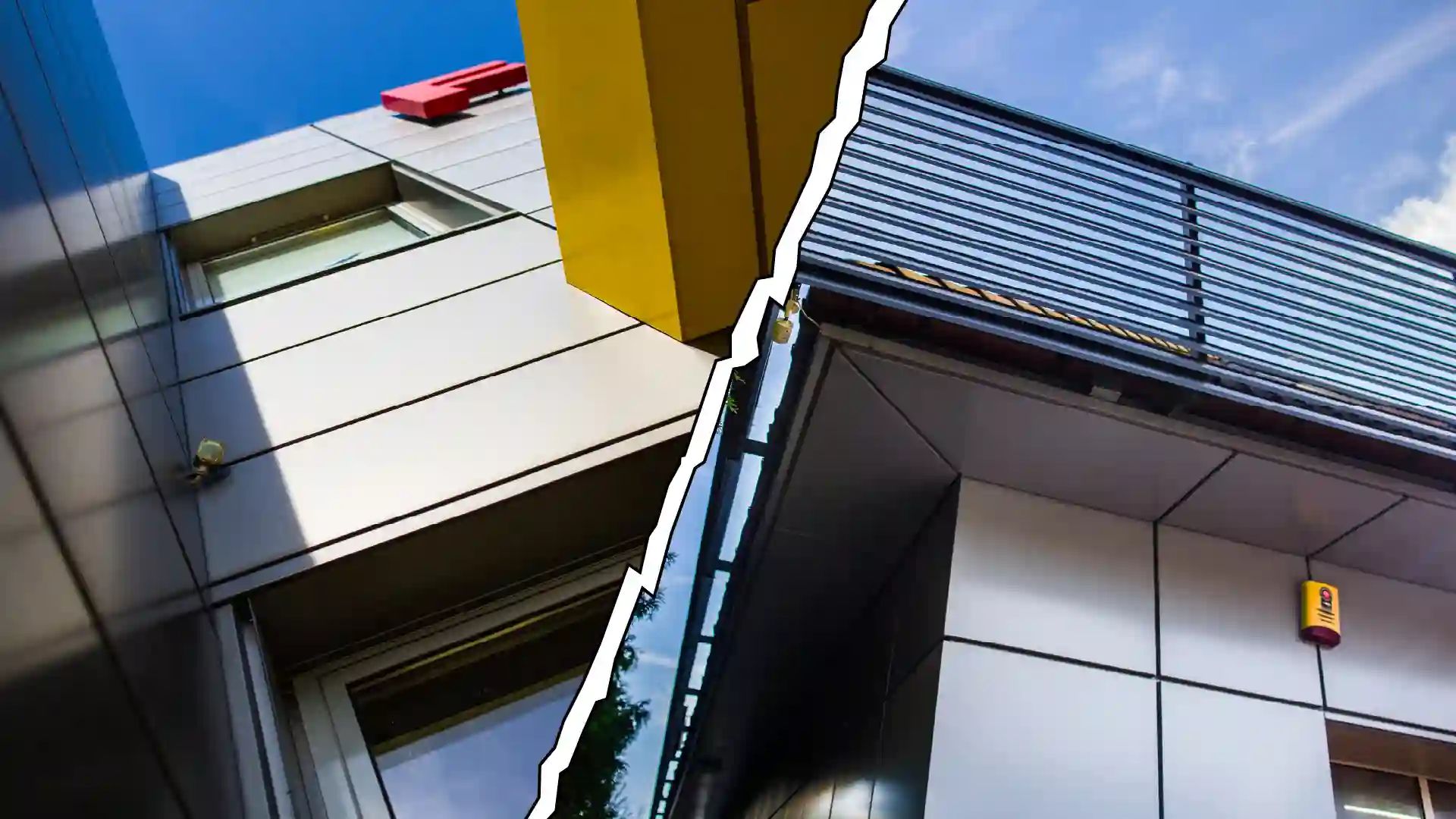
Facade cassettes have gained popularity thanks to their modern appearance and functionality. Steel cassettes, made from galvanised and coated sheet metal, are valued for their durability and lower unit cost. Aluminium cassettes, made from aluminium sheet, stand out for their lightness and natural corrosion resistance. The choice of the right material therefore depends on the specifics of the project, climatic conditions and the investment budget. Below we compare the characteristics of both solutions and the key differences in design practice.
Steel Facade Cassettes – Characteristics and Applications
Steel cassettes are produced from galvanised steel sheet (usually 1.25–1.5 mm thick) coated with a powder lacquer. This makes the panels exceptionally durable and resistant to mechanical damage. Steel is a modern, attractive and durable facade material, meaning that steel cassettes retain flat geometry even at large dimensions. The thickness of the steel sheet (e.g. 1.25 mm) gives panels high rigidity, so they do not deform under the influence of wind.
Advantages of Steel Cassettes
High strength and rigidity (resistant to wind and impacts), lower material cost, easily available quality certificates. Steel sheet is non-combustible and, with an appropriate coating, resistant to weather conditions.
Disadvantages of Steel Cassettes
High mass – resulting in greater load on the substructure (the frame must be more robust) – and the need for coating protection: damage to the lacquer can lead to corrosion.
Applications of Steel Cassettes
They work well in projects requiring a durable, heavier facade (e.g. industrial halls, public buildings). They are well suited where simplicity of execution and low cost are priorities. Thanks to their reinforced construction, steel cassettes are chosen for larger facade elements and wherever the design requires exceptional durability under load.
Aluminium Facade Cassettes – Characteristics and Applications
Aluminium cassettes are made from aluminium sheet approximately 2 mm thick. Aluminium as a material is very lightweight (approximately 3 times less dense than steel), which significantly reduces the load on the building’s load-bearing structure. A natural advantage of aluminium is its corrosion resistance – even without additional protection, rusting is unlikely. Aluminium components are usually coated with a lacquer (powder) finish, which additionally protects against UV radiation and other weather conditions (maintaining vivid colours).
Advantages of Aluminium Cassettes
Very low weight (facilitating transport and installation), natural corrosion resistance, long-lasting lacquer coatings (colours do not fade).
Disadvantages of Aluminium Cassettes
Higher material price, lower mechanical strength, greater thermal expansion, and the possibility of galvanic corrosion when in contact with other metals. Aluminium panels require thicker material (usually 2 mm) and may require special brackets for thermal movement.
Applications of Aluminium Cassettes
Chosen for prestigious investments and projects where weight and corrosion resistance are key (e.g. office buildings, facades in coastal zones). Lightweight aluminium cassettes allow for impressive but not heavily loaded structures. They are also suitable at great heights (lower load on foundations) and in harsh climatic conditions – resistance to water and salts makes them a recommended solution.
Comparison of Properties and Costs
Weight
Steel cassettes are several times heavier than aluminium ones (e.g. 1 m² of 1.25 mm steel cassette weighs approx. 9–10 kg, and 2.0 mm aluminium – approx. 5–6 kg). The greater weight of steel panels requires a more robust substructure.
Sheet Thickness
Typically, thinner steel sheets (1.25–1.5 mm) are used than aluminium (2.0–2.5 mm), due to the higher strength of steel and the lower strength of aluminium.
Durability
Steel has significantly greater tensile and shear strength, meaning steel panels better withstand large mechanical loads. Aluminium, on the other hand, better dampens vibration and is less susceptible to permanent deformation after strong impacts.
Corrosion Resistance
Aluminium is naturally rust-resistant, whereas steel requires a good protective coating (zinc, aluzinc, or thick lacquer) and maintenance in case of damage. In winter, contact between aluminium and sea salt should be avoided, as galvanic corrosion may occur.
Costs
The price of cassettes is heavily dependent on the material. For example, mid-range steel cassettes cost approximately PLN 190–350/m², while aluminium ones cost PLN 350–600/m². Installation and frame costs must also be added – steel panels require stronger profiles, but steel materials are cheaper.
Summary
Steel and aluminium facade cassettes have complementary advantages. Steel cassettes are chosen where structural durability and lower material cost are important, and where the design allows for greater facade loads. Aluminium cassettes are recommended where low weight and high corrosion resistance are required (e.g. in coastal zones or office buildings). The final choice depends on the specifics of the project: it is worth taking into account the planned wind loads, climatic conditions, the required facade geometry and the investment budget.