Maintaining a PV Installation in Summer – Protecting Panels and Structures from Heat, Storms and Hail
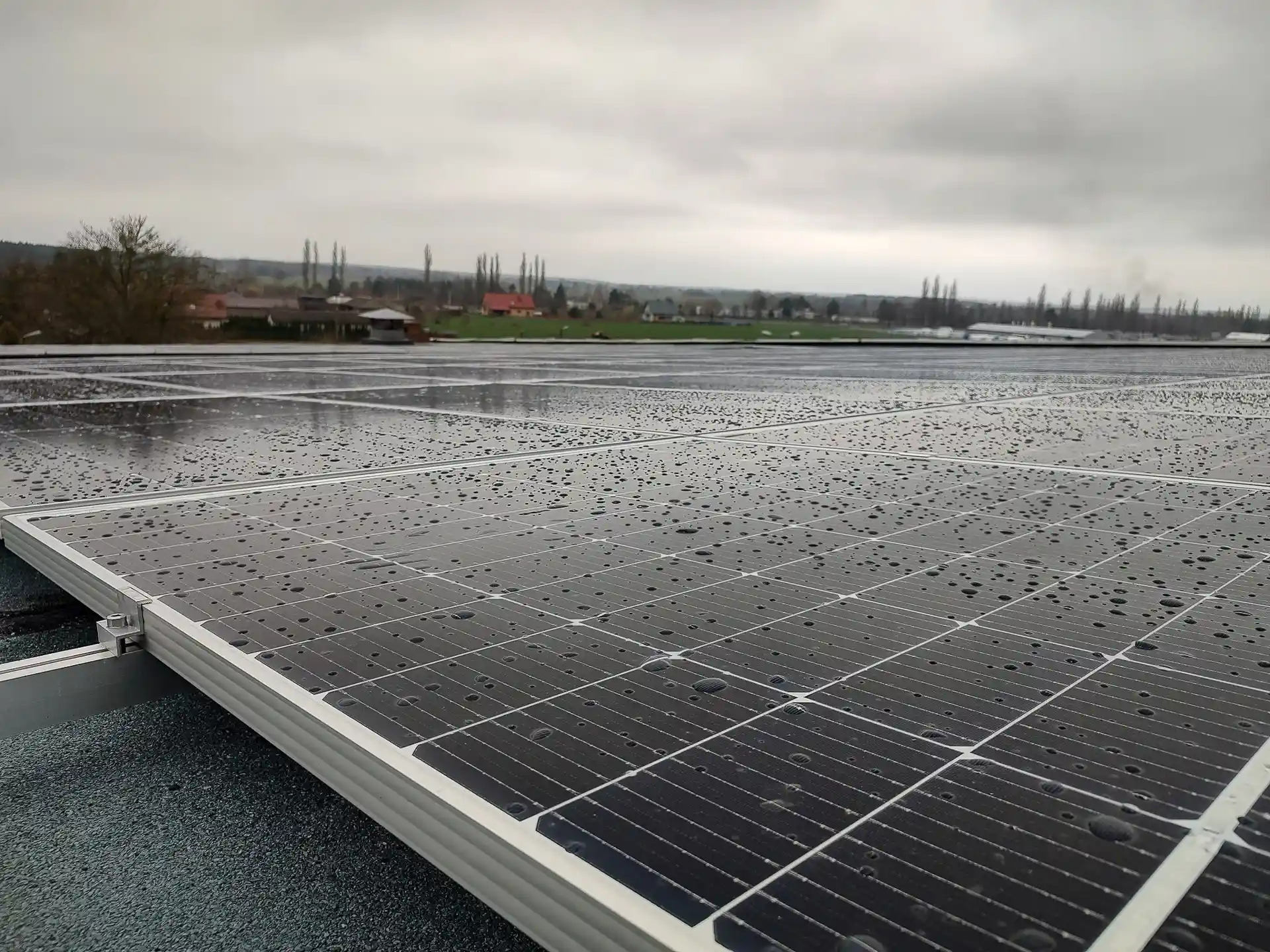
Summer is a time of intensive operation for PV installations, but also of greater risk: heat can reduce module efficiency, while violent storms with strong winds and hail can cause damage. Owners of photovoltaic installations should ensure their systems are maintained and protected against these hazards. In this article, we discuss methods for protecting PV panels and frames from summer extreme conditions, which frequently occur from May to October.
Does Heat Reduce the Efficiency of Photovoltaic Panels?
High air and cell temperatures cause a natural drop in PV efficiency. The standard temperature coefficient of silicon panels is approximately –0.3%/°C, meaning that every degree Celsius above 25°C reduces module output by approximately 0.3–0.5%. In practice, PV modules in full sunlight heat up to around 50–60°C (i.e. up to 20–30°C above ambient). This means a loss of several percent of nominal power (e.g. at 10°C above reference temperature, it drops by approximately 3%). This is why, when designing installations, it is recommended to leave adequate clearance from the roof or ground surface for ventilation, to limit panel overheating. It is also important to remember that permanently exceeding the maximum operating temperature (approximately 85°C at the cells) can damage the junction box and panel diodes.
Strong Winds and Storms – Protecting PV Installations
Wind Resistance
Photovoltaic modules must withstand the standard wind load – the IEC 61730-2 certificate requires at least 2,400 Pa of suction force (equivalent to a wind of approximately 130 km/h). A correctly installed system can withstand standard storms without damage – violent downpours and wind speeds of around 90–100 km/h are unable to damage a well-executed installation. Nevertheless, after every strong storm it is worth visually checking the fixings and load-bearing structure, ensuring that bolts and connections are tightened and there are no cracks or deformations. Installation errors or loose components are the most common cause of damage in strong winds.
Lightning Protection
PV panels themselves do not attract lightning any more than other objects – lightning strikes the highest points (trees, buildings) regardless of material. Nevertheless, the PV installation must be protected against the effects of lightning strikes: correct earthing and the use of surge arresters are essential. This allows any excess charge from a storm to be safely discharged to ground without damaging the panels or the inverter. A correctly installed and protected PV system does not pose a fire risk during a storm – on the contrary, it is the lack of earthing and surge protection that exposes the system to overheating of connections, short circuits or even fire.
Protecting Panels from Hail
Standard Resistance
Most PV modules have a certificate guaranteeing that they can withstand the impact of a hailstone 2.5 cm in diameter at a speed of approximately 120 km/h. Such resistance protects against typical hail events and ensures that panels remain durable under standard meteorological conditions.
Enhanced Durability Panels
In regions where hailstorms occur frequently or can be very severe, modules with a reinforced structure can be used. Some panels are tested and certified for hail up to 4–5 cm in diameter falling at approximately 120 km/h, which significantly increases installation safety in extreme conditions.
Additional Protection
Anti-hail netting can be installed above the panels as additional protection. These nets (e.g. made from UV-resistant HDPE) stop hailstones before they hit the module glass. Although they reduce light transmission slightly (a reduction in installation efficiency of a few percent, ~7%), they more effectively protect panels against damage and the potential need for costly module replacement.
Regular Inspections and Maintenance
Checking Fixings
At least once a year (or after particularly intense and severe storms), the mechanical condition of the PV load-bearing structure should be checked. The stability of the fixings must be assessed – checking that bolts and clamp connections are tightened – and any signs of corrosion caused by mechanical damage or cracks in the load-bearing elements should be looked for. Loose connections or damaged profiles can generate a certain risk under very violent and extreme conditions, so prompt replacement of damaged elements eliminates the possibility of future failures.
Cleaning Panels
Contamination on module glass (dust, leaves, road dust, pollen) reduces the available transparent surface and blocks sunlight. Surface soiling can reduce the efficiency of the entire system. It is therefore worth regularly rinsing panels with clean water (preferably rainwater or with a mild detergent) – especially after dry periods.
Electrical Inspection
The condition of DC/AC wiring, MC4 connectors and electrical protections should be assessed. Check that cables are not loose, damaged or chewed by rodents, and that connections are sealed. Ensure that overcurrent, residual-current and surge protection devices are working correctly. If in doubt, measure earthing resistance and continuity of bonding connections – a safe PV installation also means correct protection against electric shock and lightning.
Production Monitoring and Diagnostics
Installing a PV monitoring system is recommended – one that collects real-time data from modules and the inverter. This allows energy production and key operating parameters (output power, voltage, current and panel temperature) to be continuously monitored. Monitoring allows immediate detection of efficiency drops or anomalies (e.g. problems with a panel or the inverter). These systems often send alerts about failures or unusual installation behaviour, enabling a rapid service response. Through continuous diagnostics, energy losses caused by potential damage or contamination can be significantly reduced and the installation maintained in optimal condition.
Summary
For a photovoltaic installation to survive the summer without losses and failures, the combination of good maintenance practices and the selection of appropriate components is key. Regular checking of fixings, ensuring panel ventilation, hail protection and a well-designed lightning protection system minimise the effects of heat and violent storms. It is also worth paying attention to the class of mounting structure used – for example, structures made from structural steel with ZM coating (corrosion-resistant materials) and holding TÜV/CE certificates confirming resistance to wind and snow loads and compliance with EN 1090. The choice of proven solutions (resistant structure, automatic monitoring, earthing) and systematic inspections will allow the farm or company installation owner to maximise output in summer and reduce the risk of unplanned failures – ensuring that the photovoltaic investment operates reliably even in the most challenging weather conditions.