Sheet Metal Punch Press – What It Is and How It Works
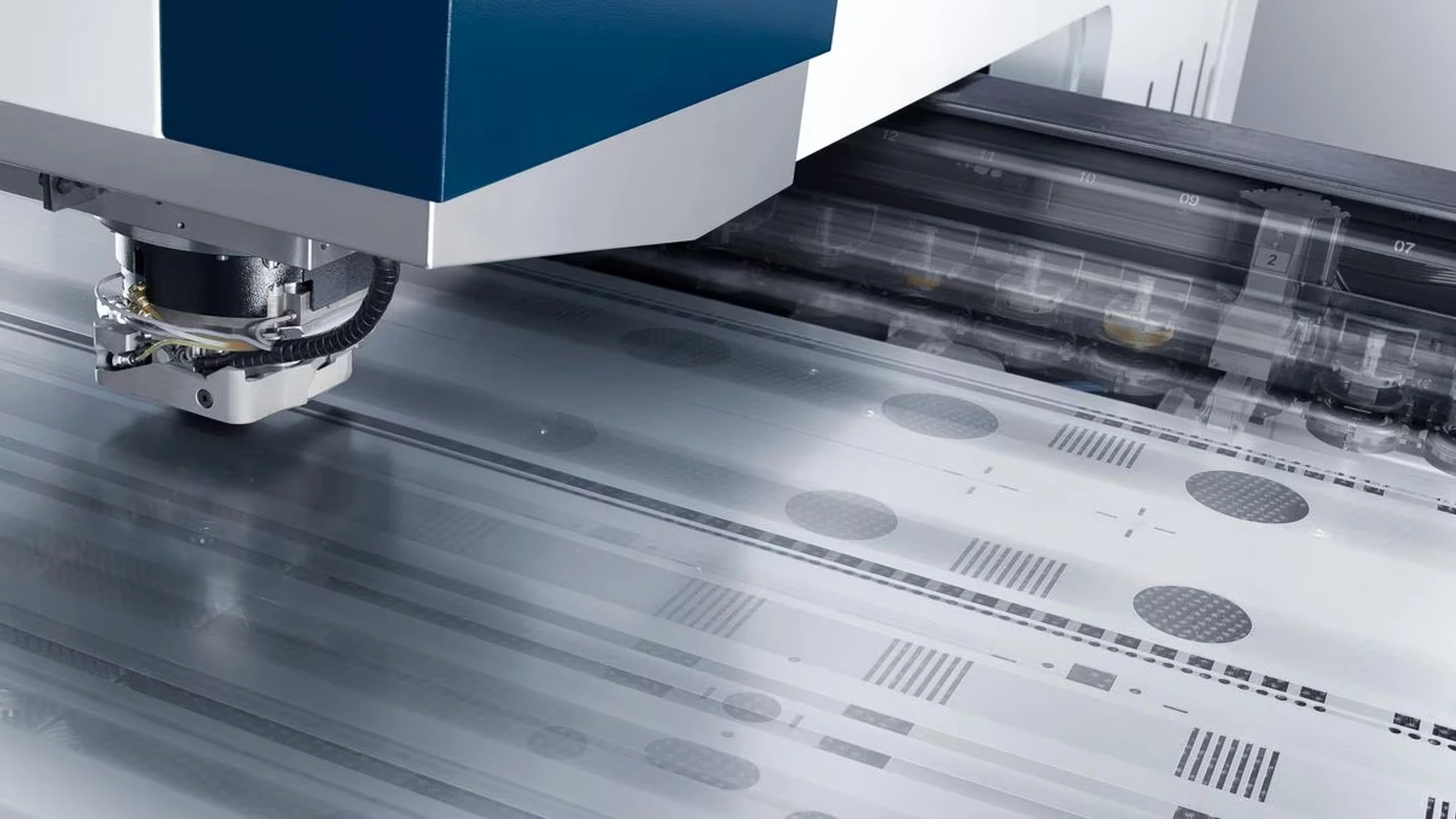
Modern metal processing requires machines that combine speed, precision and maximum repeatability. Alongside press brakes and laser cutting machines, one of the most important elements in the machinery of any professional manufacturing plant is the sheet metal punch press. Thanks to it, the process of cutting complex shapes, holes and embossings becomes extremely efficient. In this article, we explain exactly what this machine is, how the sheet metal punching process works and why it plays such an important role in industry.
What Is a Sheet Metal Punch Press?
A sheet metal punch press is an advanced industrial machine, most commonly CNC-controlled, designed for cold plastic forming. Its main task is to cut specific shapes from a sheet metal blank, create holes (perforation) and perform minor three-dimensional forming operations. Unlike laser cutting machines, which are based on thermal processing (melting and vaporising material), a punch press operates on the principle of mechanical processing, using enormous pressing force. These machines work excellently with many materials, such as structural steel, stainless steel, aluminium and copper. Their greatest advantage is their remarkable speed of operation – modern punch presses can perform up to several hundred strokes per minute, making them indispensable in serial production.
Operating Principle – Punch and Die in Action
The operating process of a punch press is based on a simple but extremely effective mechanism. The working element of the machine is a set of tools consisting of two closely matched parts: the punch (cutting tool) – which strikes the material from above with enormous force; and the die (cutting support) – located beneath the sheet metal, with an opening matching the punch in shape and dimensions. When a sheet metal blank is precisely positioned between the punch and die, the machine generates the appropriate pressure (hydraulic or electric). The punch pierces the sheet metal and the cut-out fragment (technical offcut) falls into the die opening. Thanks to advanced CNC systems, the sheet metal is automatically and rapidly moved across the work table, allowing subsequent holes to be made at precisely programmed locations with accuracy to fractions of a millimetre.
Types of Sheet Metal Punch Presses
- CNC turret punch presses – among the most advanced and versatile machines. Equipped with a rotating head (the “turret”) containing several dozen stations with different working tools (punches and dies). The machine can change tools in a fraction of a second, allowing many different holes and embossings to be made in a single operating cycle.
- Hydraulic punch presses – offer very high pressing force, enabling excellent performance with thicker and harder sheet metal blanks.
- Electric (servo-electric) punch presses – characterised by very quiet operation, high energy efficiency and the highest positioning precision. Due to lower operating costs, they are increasingly chosen for modern production halls.
Key Advantages of Sheet Metal Punching
- Unrivalled speed (especially for perforation) – if a component requires dozens or hundreds of holes (e.g. ventilation grilles), a punch press will complete this work significantly faster than a laser.
- No heat-affected zone (HAZ) – since processing takes place cold, the material is not heated. This eliminates the risk of thermal distortion and changes in the metal’s structure.
- Multi-function in a single cycle – modern punch presses not only cut but can also perform minor forming operations – e.g. embossings, louvres, threading and bridges. This reduces the need to transfer the component to other machines.
- 100% repeatability – thanks to CNC systems, every component coming off the machine is identical, greatly facilitating subsequent assembly or welding.
Applications in Industry and at PG Group
Punched and perforated sheet metal components surround us everywhere. They are used to build control cabinets, machine housings, household appliances, metal furniture, ventilation systems, and in the automotive and aerospace industries. At PG Group, punching and perforation technology forms an important part of our machinery. In combination with bending and laser cutting, it allows us to produce high-quality components for the photovoltaic sector (supporting structures, frames), the construction industry (facade cassettes and panels) and to deliver prefabricated parts with very complex geometries. Our machines ensure material optimisation and rapid fulfilment of even the most demanding projects.
Summary
A sheet metal punch press is a powerful, fast and precise CNC tool that forms the foundation of efficient plastic forming. Its characteristics – speed of operation, absence of thermal material distortion and the ability to simultaneously cut and form (emboss) – make it an indispensable machine in serial metal production. Together with lasers and press brakes, punch presses form at PG Group a comprehensive technological chain in which an advanced finished product ready to meet the highest industry standards is produced from a flat sheet metal blank.