How to Build a Photovoltaic Farm – Where to Start?
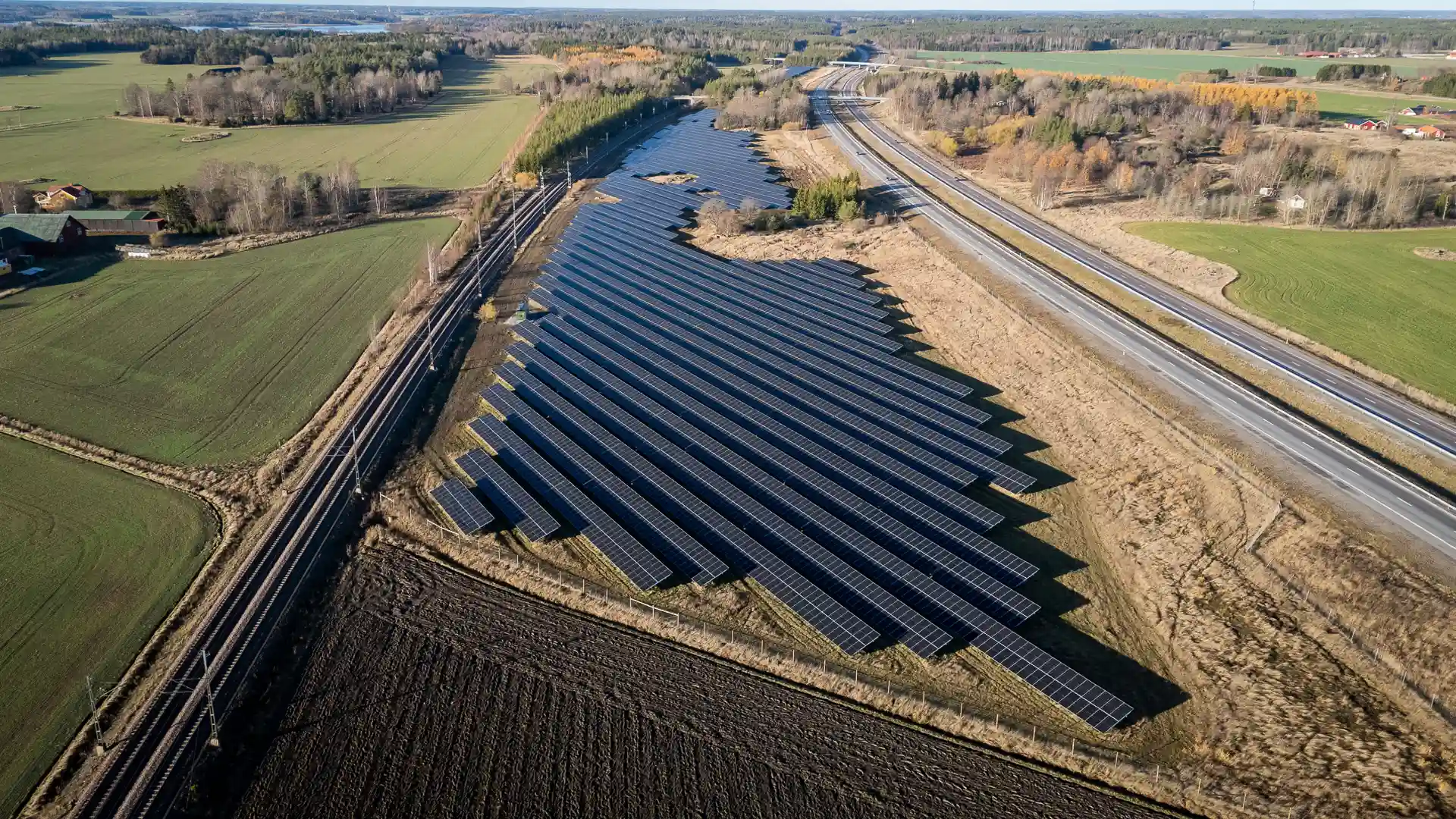
Investing in a photovoltaic farm can pay back within just a few years, so it is no surprise that more and more investors – both large companies and private entrepreneurs – are considering building their own solar power plant. Before a farm starts generating profits, however, a series of formal and technical steps must be completed: from finding a suitable plot of land, obtaining permits, designing the installation, through to mounting the panels and connecting the farm to the grid. In this guide, we present a practical step-by-step plan for building a ground-mounted PV farm, so that the investment proceeds smoothly and ends in success.
Step 1: Choosing and Preparing the Site
The first step is finding a suitable location. A farm with a capacity of approximately 1 MW requires a plot of land of around 1.5 to 2 hectares (15,000 to 20,000 m²). Poor-quality agricultural land – class V or VI, or possibly class IV – works best (though construction on class IV land is currently subject to regulatory restrictions). It is essential that the site has full solar exposure – it should be flat or with a slight southward slope, unshaded by trees, buildings or other structures. The site should also be located close to a medium-voltage power line or a nearby main supply point (GPZ), which will facilitate the connection of the farm to the grid.
Locations in nature conservation areas (e.g. landscape parks or Natura 2000 sites) should be avoided, as such designations significantly extend administrative procedures and may even prevent the installation from being built. The site should also not be at risk of flooding or be waterlogged. An advantage is a plot with access to a paved public road, which facilitates the transport of farm components to the construction site. In practice, PV farms are often built on leased land, with a standard 29-year lease agreement corresponding to the panel warranty period.
Step 2: Formalities – Permits and Grid Connection Conditions
Building a photovoltaic farm requires completing a number of key formalities:
- Environmental decision – issued by the municipality, it defines how the investment is to be implemented to minimise environmental impact. Required for farms occupying more than 1 ha (or 0.5 ha in protected areas). The official processing time is 60 days, but in practice the procedure often takes around 150 days.
- Local plan or building conditions – it must be verified that the location permits the construction of a farm from a planning perspective. If no local spatial development plan (MPZP) exists, a building conditions decision (WZ) must be obtained.
- Grid connection conditions – an application must be submitted to the relevant Distribution System Operator (OSD – e.g. PGE, Tauron, Enea, Energa) for grid connection conditions. The operator has 150 days by law to issue the conditions. The conditions specify the technical requirements that must be met.
- Building permit – the last key formal stage. The application is submitted to the relevant county office (starostwo powiatowe) together with a building design. The office has up to 65 days to issue a decision, but in practice the procedure takes around 90 days.
From the submission of the first applications (e.g. for grid connection conditions) to the obtaining of all decisions and permits, several years typically pass – according to industry practice, 2–3 years is the typical timeframe for the preparatory stage of a farm.
Step 3: Farm and Supporting Structure Design
In parallel with the formal procedures, design work is carried out. The PV farm design should be prepared by experienced experts with construction and electrical qualifications, who will prepare complete technical documentation. It consists of three main parts: an architectural and structural design (layout of all farm elements, panel rows, supporting structures and foundations, accompanying infrastructure), an electrical and telecommunications installation design (DC/AC wiring scheme, earthing system, SCADA monitoring), and a grid connection design (medium-voltage transformer station and connecting line to the distribution network).
Optimising the supporting structure design allows less steel to be used and installation time to be shortened while maintaining full strength. It is therefore worth entrusting this task to an experienced mounting system manufacturer. A specialist PV structure manufacturer can provide design support at this stage, proposing solutions that facilitate installation (e.g. prefabricated components, modular systems).
Step 4: Selecting Suppliers and Contractors
With all permits obtained and the technical design completed, the next step is to procure equipment and select construction contractors. The key farm components are: photovoltaic modules, inverters, and the panel mounting structure, as well as electrical infrastructure (cabling, transformer station, monitoring system, etc.). It is worth choosing reliable suppliers – purchasing panels, inverters, mounting systems and other equipment from reputable manufacturers, guided by quality parameters (efficiency, reliability, warranty length) rather than the lowest price alone. For example, leading-brand PV panels typically carry a 25-year performance warranty, inverters around 5–10 years, and steel structures protected by corrosion-resistant coatings (e.g. zinc coating) for over 15–20 years. Some PV structure manufacturers offer specialist installation training for mounting teams – taking advantage of this can accelerate on-site work and ensure the entire installation is carried out correctly and safely.
Step 5: Panel and Infrastructure Installation
After months of preparation, the moment arrives to begin construction and installation work. The construction process itself is relatively short compared to the formal stage – for a 1 MW farm, installation work can take from several to over ten weeks. The main installation stages include:
- Foundation works – preparation of foundations for panel frames (driven steel piles, screwed anchors or concrete blocks, depending on geotechnical conditions).
- Mounting structure installation – installation of steel or aluminium frames (“tables”) on the prepared foundations, arranged in rows in accordance with the design.
- Permanent fencing – construction of a permanent fence around the entire farm site to protect against unauthorised access.
- PV panel installation – mounting PV modules on the supporting structure and electrically connecting them into strings using solar cables.
- Inverter installation – installation and connection of inverters that convert DC current from panels into AC current.
- DC/AC electrical cabling – laying and securing cable runs, plus construction of the earthing network.
- Transformer station and grid connection – installation of the medium-voltage transformer station and connection of the farm to the grid in accordance with connection conditions.
- Monitoring and security system – installation of CCTV, intrusion detection and SCADA remote monitoring of farm performance.
- Final measurements and tests – earthing resistance measurements, cable continuity and insulation tests, inverter configuration verification.
Step 6: Commissioning and Connecting the Farm to the Grid
When construction is complete, the last formalities must be completed for the farm to officially begin producing energy. The investor notifies the completion of construction to the County Construction Supervision Inspectorate (PINB) and informs the grid operator (OSD) of the installation’s readiness for connection. Final inspections with OSD representatives then take place. After a positive inspection, the operator signs the connection agreement with the investor and physically connects the farm to the power grid. Simultaneously, commissioning and testing of the entire installation are carried out. Once these procedures are successfully completed, the photovoltaic farm can officially begin operating.
How Much Does It Cost and How Long Does It Take?
The total process – from securing the land (lease agreement) to commissioning production – takes on average 2 to 3 years, with the preparatory phase accounting for most of this time. The physical construction of a 1 MW farm takes approximately one month (under favourable conditions). The total cost of building a 1 MW farm in Poland is indicatively around PLN 4.4–4.8 million, covering all components (PV modules, inverters, structures, cabling) and necessary infrastructure (fencing, monitoring, grid connection). This equates to approximately PLN 4,500 per 1 kW of installed capacity. Assuming 1 MW of installed capacity generates around 1,000 MWh of electricity annually, and a sale price of PLN 330/MWh, annual gross revenue would be approximately PLN 330,000. After deducting operating costs of around PLN 40–60,000/year, the net profit is approximately PLN 270–290,000/year, giving a simple payback period of approximately 9–10 years. After this, the farm generates revenue for the rest of its operational life (panel lifespan is estimated at at least 25–30 years).
Summary – Support at Every Stage
Building a photovoltaic farm is a multi-stage undertaking requiring both the completion of numerous administrative formalities and specialist engineering knowledge in the design and installation of the installation. As shown in this guide, the process can be divided into clear steps – from selecting a suitable plot, obtaining permits, through to construction and connecting the farm to the grid. At each of these stages, it is worth using the support of experienced industry partners. Specialist companies in the photovoltaic sector today offer comprehensive solutions for investors planning their own farms: from consultancy and farm design (e.g. optimising the panel layout and supporting structure for specific conditions), through the supply of all necessary components (mounting structures, modules, electrical equipment) with transport logistics, to supervision of installation work and additional training for installation teams. With such a comprehensive approach, investment realisation proceeds more smoothly, and the completed photovoltaic farm meets the highest quality and safety standards.