Cold-Formed Profiles – The Unsung Heroes of Modern Construction
What Are Cold-Formed Profiles?
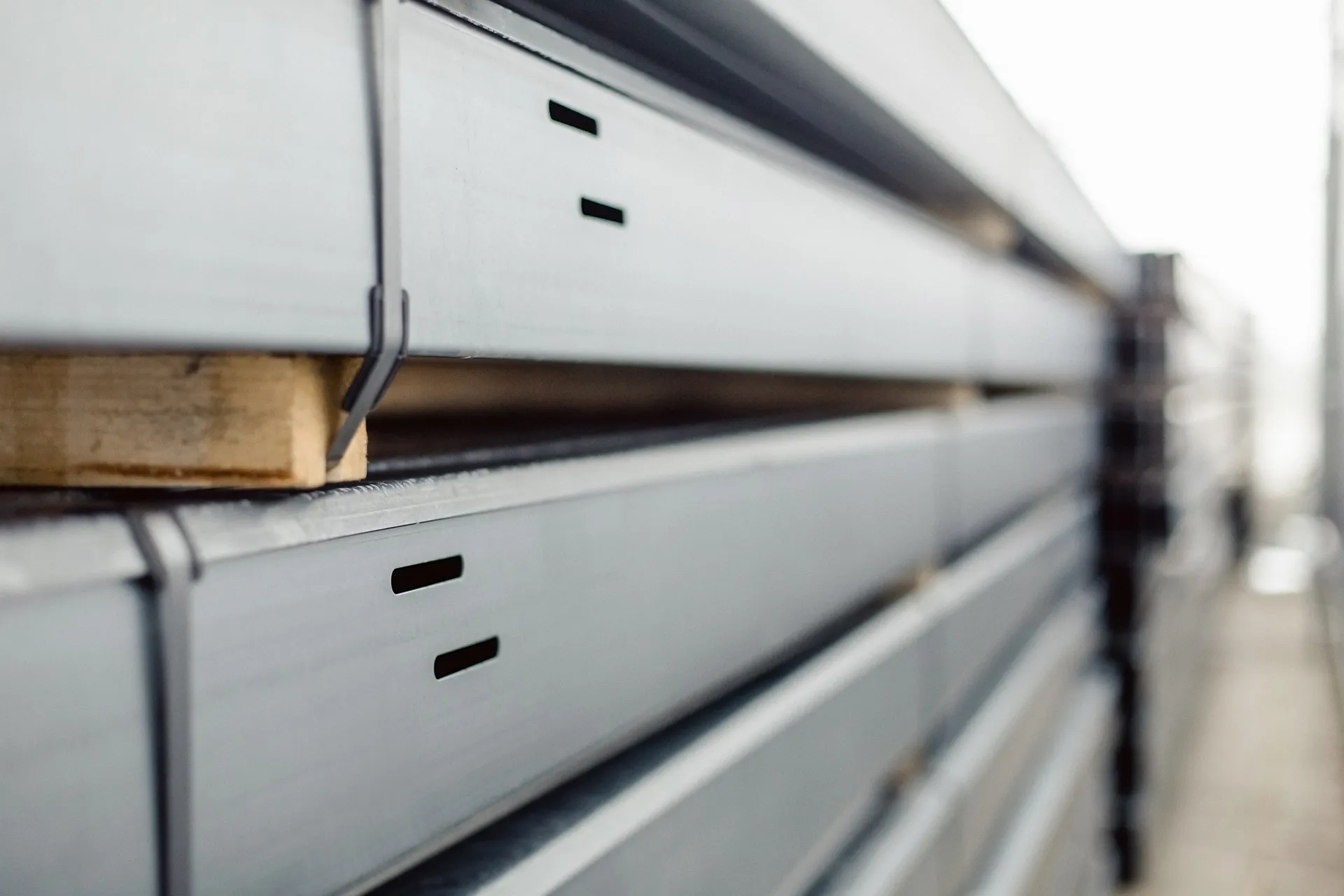
Cold-formed profiles are structural elements made from steel sheet that has been formed cold – that is, without the use of high temperature. In other words, the shape is given by bending or rolling sheet metal at room temperature, using high force and precision machinery, rather than by heating and casting. Thanks to this process, steel sheets are turned into lightweight yet strong thin-walled sections (usually from approximately 1 mm to several millimetres thick). The profiles produced in this way have a wide variety of cross-sections – from open sections such as channel sections (C), Z-sections (Z) or angle sections (L), to closed profiles with rectangular or square cross-sections (sheet metal tubes). They earn the colloquial name “unsung heroes” of construction because they remain invisible in everyday use (hidden in walls, under roof cladding or facades), yet play a key role in the load-bearing capacity and stability of modern structures. Without these unassuming elements – forming the steel skeleton of many buildings – industrial halls, warehouses or even solar farms and skyscraper facades could not be built.
How Are Cold-Formed Profiles Made?
The process of manufacturing cold-formed profiles involves the plastic forming of steel sheet without heating the material. In practice, two methods are most commonly used: bending a sheet on press brakes and continuous roll forming from a steel coil. Regardless of the method, modern high-force, high-precision machines are required, as steel offers great resistance during cold working. During such bending, the dislocation density increases in the metal’s structure, causing work hardening – the profile becomes harder and stronger, albeit slightly less ductile. Importantly, cold working allows very high dimensional accuracy to be achieved, which translates into perfect fit on the construction site.
Cold Bending vs Hot Rolling
Unlike hot-rolled profiles (e.g. widely used I-beams or hot-rolled channels from thick steel), cold-formed profiles are produced with significantly less energy expenditure – the billet does not need to be heated to several hundred degrees. The process is also more material-efficient: sheet metal bending produces less waste and allows the steel billet to be used effectively. Cold-formed profile production is therefore advantageous both in terms of cost and environmental impact. It should also be noted that the range of cross-sections that can be achieved is practically unlimited – modern technologies allow the manufacture of sections tailored to project requirements, limited in practice only by designers’ imagination and machine capabilities.
Properties and Advantages of Cold-Formed Profiles
- Lightweight construction – profiles have thin walls and void space in the cross-section, so their self-weight is low. This facilitates transport to the construction site and installation at height without heavy equipment.
- High strength and load-bearing capacity – despite their low weight, a correctly shaped cold-formed profile can carry significant loads. It has a favourable strength-to-weight ratio, enhanced by work hardening and purposeful geometry (e.g. stiffening folds, edge bends that increase rigidity).
- Good rigidity and dimensional stability – thin-walled sections are designed to maintain rigidity, with additional folds (lips, flanges) on edges that prevent buckling. Correctly installed C or Z profiles form a stable framework resistant to wind and service loads.
- Durability and resistance to external factors – most cold-formed profiles are made from steel with an anti-corrosion coating, e.g. hot-dip galvanised steel. The zinc layer protects against corrosion, which is crucial for elements exposed to weather conditions. Steel is also non-combustible and resistant to pests and fungi.
- Freedom of shaping and variety of dimensions – sheet metal bending technology allows very different cross-section profiles to be achieved, from standard C, Z, and L sections to profiles with special shapes designed for a specific structural system. Elements can be custom-made to the required length with mounting holes exactly where needed.
- Fast installation and economic efficiency – prefabricated steel profiles fit together with high accuracy, allowing rapid assembly. Elements are typically joined with bolts or self-drilling screws, without the need for on-site welding, reducing investment realisation time and costs.
Applications of Cold-Formed Profiles in Construction
Industrial Halls and Structures
Large-span steel halls, warehouses and canopies could not be built without cold-formed profiles. It is these elements that form the lightweight skeleton of the walls and roofs of such structures. C and Z profiles – channel and Z-sections – are most commonly used here, installed as roof purlins (supporting the roof cladding) and wall rails (for fixing wall cladding panels). Their task is to effectively transfer the load from the cladding (trapezoidal sheets, sandwich panels, etc.) to the main hall frames, at minimal self-weight. Thanks to C and Z profiles, the structure is much lighter than if built from traditional thick-walled I-beams, while the required load-bearing capacity is maintained.
Photovoltaic Structures
The dynamic growth of solar energy has made PV panel supporting structures another important application for cold-formed profiles. Both large ground-mounted solar farms and smaller roof installations use lightweight steel frames on which photovoltaic modules are mounted. Cold-formed profiles – most commonly channel sections, Z-sections or special profiles with cross-sections tailored to panel fastening and coated with zinc-magnesium alloys – are perfectly suited to this role. They are strong enough to hold the weight of the panels and resist wind, yet light enough not to overload the roof structure (in roof installations) or foundations (in ground-mounted farms). Their galvanised surface guarantees resistance to weather conditions for many years of operation in the open. Companies specialising in this segment design entire systems of steel photovoltaic structures based on cold-formed profiles, guaranteeing rapid panel installation and the durability of the entire installation.
Facade and Cladding Systems
Another application of cold-formed profiles is facade systems on buildings. Modern facades – especially in commercial and office construction – often consist of external panels (e.g. cassettes, composite boards, glass, etc.) attached to the building’s load-bearing structure. This facade substructure is very often made from thin-walled steel profiles. Z and C sections, as well as various hat profiles and perforated channels, form a grid of the frame attached to the load-bearing wall. The actual facade panels are then fixed to these. This solution provides adequate ventilation (in ventilated facades) and enables precise levelling of the cladding. Cold-formed profiles in facades serve as the link between the heavy facade elements and the main building structure, transferring loads from wind or panel weight to the walls or columns. From modern office buildings to shopping centres – cold-formed profiles faithfully “hold the facade”, giving architects freedom in shaping the building’s appearance and giving structural engineers confidence in the safety of the solution.
Summary – Steel Skeletons of Modern Structures
Cold-formed profiles, though invisible in everyday use, play an enormous role in contemporary construction. Thanks to them, hall and warehouse structures are light yet strong. Solar farms stably hold hundreds of panels, and striking building facades adorn cities, safely attached to steel frames. The “silent” heroes provide the required load-bearing capacity where traditional materials would be too heavy or uneconomical. The future of lightweight, strong and efficient structures will continue to be built on cold-formed profiles.