Laser Cutting Machine – What It Really Is and How It Works
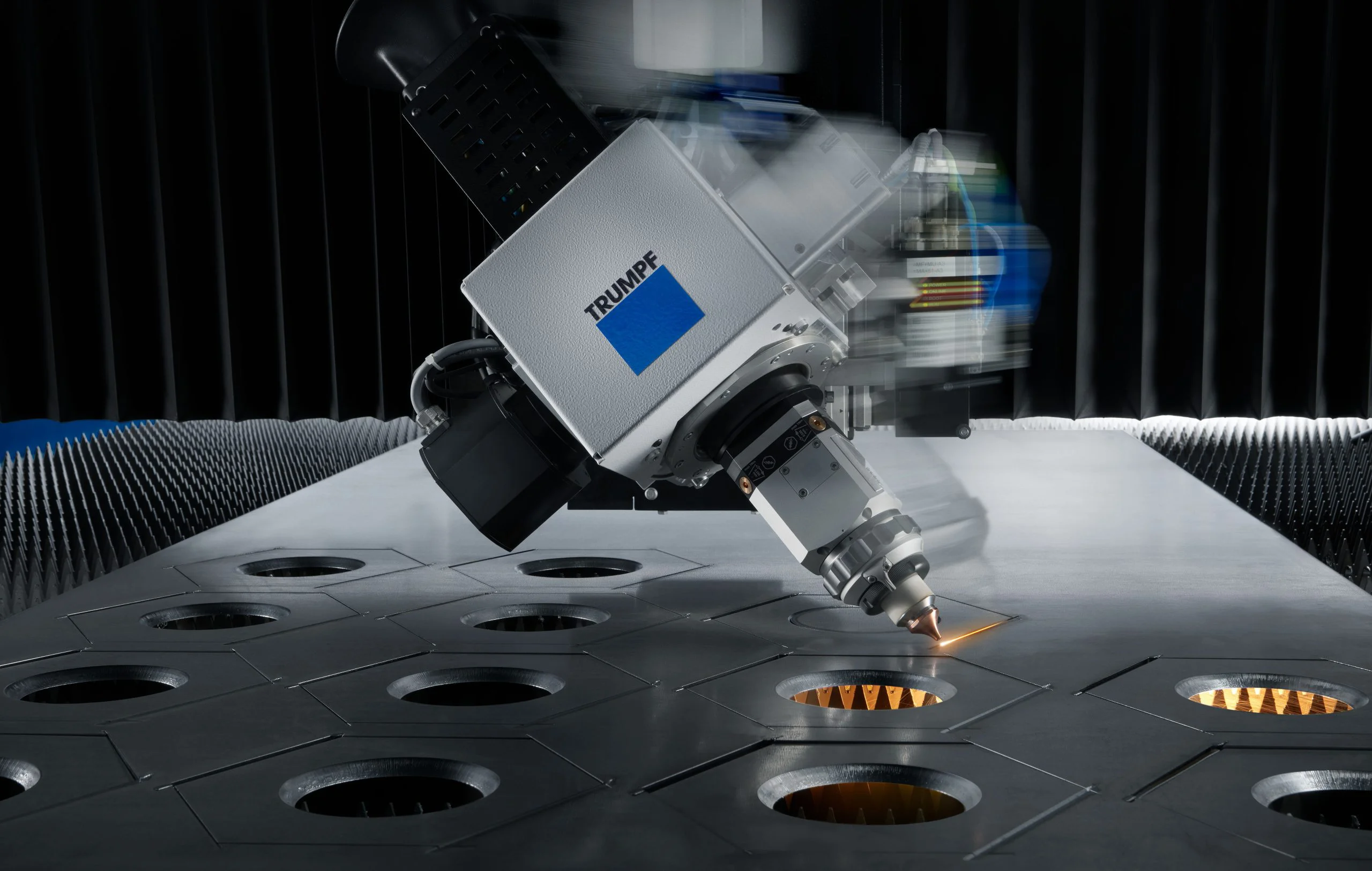
Laser cutting is one of the most advanced and versatile methods of sheet metal processing. A laser cutting machine combines precision, speed and production flexibility, making it a key tool for the modern construction, automotive and photovoltaic industries. In this article, we outline the operating principles of laser cutting machines, discuss the main types of laser technology and show how they perform in practice.
What Is a Laser Cutting Machine and Where Is It Used?
A laser cutting machine is an advanced CNC machine that uses a concentrated beam of laser light to thermally cut materials. Thanks to very high energy density, the laser can locally heat material to its melting or vaporisation temperature, creating a narrow and precise cutting gap. Laser cutting machines find wide application in the processing of various metallic materials, including: structural steel (extremely popular in industrial production), stainless steel (used in the food, chemical and medical industries), aluminium (valued in automotive, aerospace and lightweight structures), copper and brass (used in electronics and electrical installations), and galvanised steel (ideal for components exposed to weather conditions). At PG Group, laser cutting technology is primarily used to produce components for the photovoltaic sector (load-bearing structures, brackets, frames), steel structures, facade cassettes and prefabricated metal parts with complex geometries.
How a Laser Cutting Machine Works – From Beam to Finished Component
The laser cutting process consists of three key stages: generating a concentrated laser beam (CO₂ or Fibre), focusing it onto the sheet metal to locally melt the material, and using a technical gas (oxygen for economy or nitrogen for clean edges) to remove the molten metal and cool the cutting zone.
Generating the Laser Beam
The laser source generates a concentrated beam of light at a specific wavelength. Depending on the type of laser, the energy generation mechanism differs fundamentally. A CO₂ laser uses a mixture of gases (mainly carbon dioxide with the addition of helium, nitrogen and hydrogen) excited by electrical energy, producing light at a wavelength of approximately 10.6 μm. A Fibre laser uses pumping diodes that produce light transmitted through a special optical fibre doped with rare earth elements (neodymium, ytterbium), with the light reflected many times inside the fibre to produce a beam at a wavelength of approximately 1 μm.
Role of the Technical Gas
The choice of auxiliary gas is fundamentally important for the quality, speed and cost of cutting. Oxygen (O₂) – the most economical choice for cutting structural steel: it reacts exothermically with the metal, providing additional energy; allows thicker sheets to be cut at lower laser power; leaves a thin oxide layer on the cutting edge (generally acceptable in structural production); ideal for thick steel sheets (10–25 mm). Nitrogen (N₂) – an inert gas for high-quality cutting: does not react with the metal, creates a protective zone; blows out molten metal at high pressure (up to 30 bar); leaves a clean, bright edge without oxidation – ready for coating or welding; essential for cutting stainless steel, aluminium and copper; higher cost, but excellent finish quality.
Why Laser Cutting Pays Off in Every Production Sector
- Unrivalled precision and repeatability – positioning accuracy of ±0.03 mm means every component is identical to the CAD design. This eliminates the need for additional machining and ensures perfect fit in assembly.
- Minimal material waste – a narrow cutting gap (typically 0.1–0.3 mm) combined with intelligent nesting algorithms can achieve material utilisation above 95%. These are direct cost savings.
- Speed and production flexibility – laser can cut at speeds of up to 20–30 m/min for thin sheets, and changing the production programme takes minutes, not hours. There are no tooling or mould costs – from enquiry to production can take just a few hours.
- Excellent edge quality – nitrogen cutting produces clean, bright edges ready for coating or welding without additional grinding, shortening the production chain.
- Energy savings (Fibre technology) – modern fibre lasers consume up to 5 times less electricity than traditional CO₂ machines, which is enormously significant for production profitability at today’s energy prices.
- Material versatility – a single machine can process structural steel, stainless steel, aluminium, copper and brass, in thicknesses from 0.5 mm to 25 mm, providing maximum order portfolio flexibility.
- Minimal thermal distortion – the precisely focused beam minimises the heat-affected zone (HAZ), meaning no sheet deformation and preservation of the material’s mechanical properties. Particularly important for thin-walled structures and precision assembly components.
Summary
Laser cutting is an advanced sheet metal processing method combining precision (±0.03 mm), speed (up to 30 m/min) and material versatility (steel, aluminium, copper up to 25 mm). Laser cutting machines (CO₂ and Fibre) use a light beam assisted by technical gases – oxygen for economy or nitrogen for edge cleanliness. PG Group applies this technology in its production, minimising material waste (>95% utilisation) and energy costs. Investment in laser technology delivers flexibility, quality and savings in the metal sector.